





Basket
{{item.CourseTitle}}
Price: {{item.ItemPriceExVatFormatted}} {{item.Currency}}
The Readynez Webinar Seriesis now LIVE! Your FREE gateway to the latest in AI, Cloud and Security - check out the upcoming webinars HERE
Browse by Topic
Browse by Vendor

Unlimited Training
Attend all the top-notch LIVE Instructor-led Courses you want for the price of less than one course.

Cloud computing has transformed the technology landscape. At the center of this shift lies Microsoft Azure. It is a leading public cloud platform. Its comprehensive suite of services makes it essential for organizations worldwide. For information technology professionals, mastering Azure is no longer optional. Now, it is a necessity. This is where the Microsoft Azure certification path becomes crucial.
These Microsoft Certified: Azure Fundamentals certifications do more than add lines to a resume. They formally validate an individual's technical expertise and proficiency in specific skills. Holding this certification opens doors to exciting, high-demand cloud careers. And it signals to employers you have the practical skills to handle real-world cloud challenges.
The certification structure is clear. It starts with foundational knowledge and progresses through Associate, Expert, and Specialty levels. Today, our guide will help you fully understand this journey. We will start with the basics and the exam structure. And we will finish with the immense career benefits.
Microsoft's certification system is built on a clear, pragmatic structure. It has moved away from older, product-focused exams to a modern, role-based model. This change ensures certifications directly align with specific job functions and the skills professionals use daily. For example, the skills needed by a cloud administrator. They are distinct from those of a developer or a data scientist. Microsoft's certifications reflect these real-world distinctions.
This framework covers key areas like:
It ensures that once certified, a professional is job-ready for the role the certification targets. This approach is highly valued by hiring managers. It is because it guarantees a baseline of practical, relevant knowledge. Furthermore, the cloud industry evolves at a breakneck pace. To keep up, Microsoft regularly updates its certifications. These updates ensure individuals are aware of the latest services, features, and best practices. This commitment to currency makes Azure certifications a continually valuable credential throughout a professional career.
The role-based structure provides a logical sequence for learning and career progression. A beginner can start with a foundational exam. Then, they can build upon that knowledge with an Associate-level certification. And they eventually aim for an Expert credential. This clear progression helps professionals map out their career journey. And they can focus their studies effectively. It ensures every step taken is purposeful and contributes to a long-term goal.
The Azure cloud certification hierarchy is to cater to various levels of expertise. It is from novices exploring the cloud for the first time to experts managing enterprise environments. There are four main levels. Each serves a distinct purpose in the learning journey:
The value of an Azure certification extends far beyond the exam room. In a competitive global market, it provides industry recognition. It is the badge of quality that signals competence and commitment. More organizations move critical workloads to Azure. So, the demand for certified people has skyrocketed. It makes Azure skills a primary hiring factor.
Azure cloud certifications offer tangible benefits for career advancement. They are frequently tied to higher salaries and better job opportunities. Earning a credential demonstrates not just theoretical knowledge. But it is also about an understanding of practical application. It is a major advantage in project control and solution implementation. It shows a readiness for complex cloud projects.
Furthermore, these certifications validate hands-on ability and readiness for complex cloud projects. The exam process requires candidates to apply knowledge to scenarios. It ensures they are ready for the challenges of real-world cloud environments. The commitment to earning and renewing certifications demonstrates dedication to continuous development.
Microsoft's fundamentals certification strategy centers on tailoring learning paths in different areas of Azure. It ensures the skills learned are immediately applicable to day-to-day work. Microsoft aligns certifications with job titles like Administrator or Developer. So, Microsoft streamlines the learning process. And it maximizes the career benefit for the certificate holder.
These three roles form the foundational backbone of any organization using Azure. Each requires a distinct set of skills. Their respective Associate or Expert certification validates them:
Cloud technology expands. So, specialized roles have emerged, demanding dedicated certification paths. These specialties support the rapidly growing fields of data science, Machine Learning, and cyber defense:
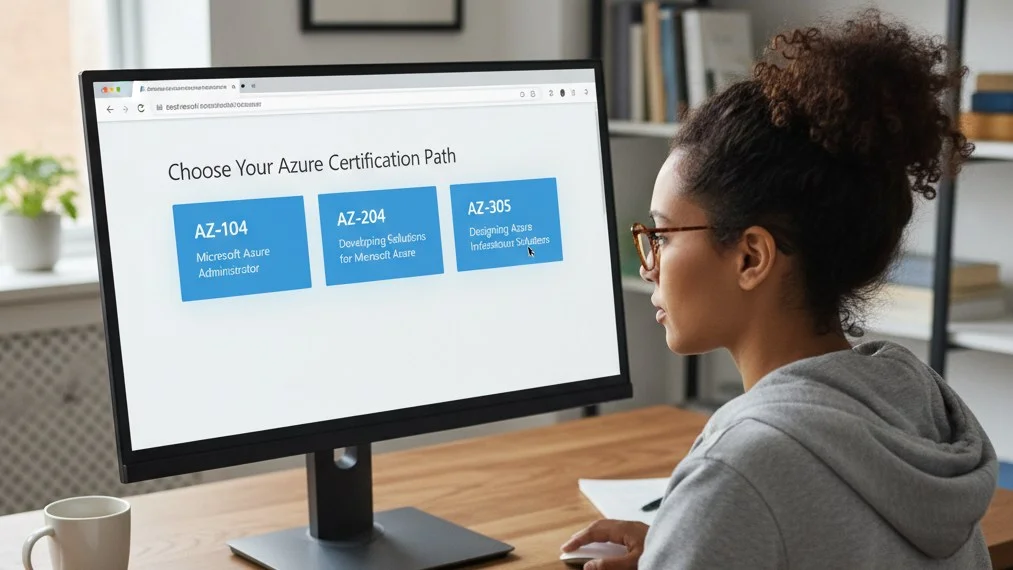
Selecting the right path requires a thoughtful self-assessment. You must consider your career goals, current experience, and technical interests. This is not a race. It is a strategic progression designed to build competence effectively.
A recommended starting point for nearly everyone is the fundamental level. The Azure fundamentals course and exam (AZ-900) provides a necessary baseline. It is about understanding cloud concepts and the Azure environment. It acts as an excellent prerequisite. It ensures you understand the terminology and basic structure. It is essential to do so before diving into complex, job-specific details. In fact, for many, the AZ-900 is the first stop on the journey. It leads to the Azure Fundamentals certification. This foundational certification does not require renewal and remains valid indefinitely once earned.
Once you have established this foundational knowledge, the path branches out based on your desired job role:
It is essential to check the prerequisites for each Azure Fundamentals certification exam. The Fundamentals exam has none. But Expert-level certifications often require a qualifying Associate-level certification first. For example, the Azure Solutions Architect Expert. To do that, you must pass the AZ-305 exam. Prior work experience in the targeted area is also highly recommended. The exams test practical application, not just rote memorization. Continuous learning is also key. Microsoft Learn offers free, guided learning paths for all certifications. It provides a structured approach to acquiring the necessary knowledge and skills.
Are you focused on data, Artificial Intelligence, or security? Then, the specialty Associate exams (DP-203, AI-102, AZ-500) serve as excellent choices. But only once a basic understanding of the cloud is in place. Starting with the Azure Fundamentals certification, such as AZ-900, ensures a smooth transition into these specialized areas.
The full range of Microsoft Azure certifications allows for personalization. You might combine an Administrator certification with a Security specialty certification. It creates a highly valuable, hybrid skill set. The key is to map your learning to your ultimate career aspiration. Use the role-based structure as your guide. The official Azure certification path is flexible and supports diverse professional trajectories. The Microsoft Certified: Azure Fundamentals is often the necessary first step.
Success in any Microsoft Azure certification hinges on a structured preparation strategy. Begin with the official Microsoft Learn study guides. They are detailed, free, and directly map to the exam objectives. Complement this with hands-on practice using Azure Free Accounts. This is vital, as the exams often include practical, scenario-based questions. Those tests your ability to apply concepts. Online labs and sandboxes allow you to configure services without cost or risk. For more structured learning, consider instructor-led courses or high-quality third-party online platforms. Practice exams are an essential final step. They help you gauge your readiness and find weak areas for last-minute review.
Once earned, Azure Fundamentals and other certifications must be maintained for Associate and Expert levels. Microsoft has simplified the renewal process. The Azure Fundamentals certification (AZ-900) does not require renewal and remains valid indefinitely. However, most Associate and Expert certifications require an annual renewal. It is to ensure skills stay current with the fast-changing platform. The renewal process is typically free. And it involves passing an online assessment taken at your convenience before your certification expires. This continuous validation keeps the credential relevant and valuable.
The long-term benefits of achieving Azure certifications are substantial. Professionally, they are linked to higher salaries. And they often serve as a prerequisite for senior cloud roles. They provide job security. It is by positioning you as a specialist in a high-demand field.
Moreover, by certifying a workforce, organizations can confidently embark on complex enterprise cloud transformation projects. Certified workers are better equipped to implement secure, scalable, and cost-effective cloud solutions. It directly contributes to the business's success. Ultimately, the time and effort invested in earning Microsoft Certified: Azure Fundamentals pays off. It is by building a robust, future-proof career in technology.

Get Unlimited access to ALL the LIVE Instructor-led Microsoft courses you want - all for the price of less than one course.